Star Wars movies work on two distinct scales. They are sprawling epics encompassing scattered worlds told on panoramic vistas, and they are also personal stories told in medium and close shots filled with layers of details. Helping balance the big picture and the close ups and keep the detail in check is Jayne-Ann Tenggren, Script Supervisor.
"My job is to look after the continuity of the movie in terms of the story and the action, and provide comprehensive notes for the editors so that they have a reference when they come to cut the picture," she describes. Her work, too, is done in differing levels of scale, from the day-to-day little tasks to an overlapping larger whole.
During principal photography, Tenggren's days began with briefings from Writer/Director George Lucas regarding what was on schedule for that day. "George doesn't really work from a shot list," says Tenggren. "He has a very clear picture in his mind of what he's trying to achieve in each scene. He comes to it each day with an idea of what he's trying to create, and then approaches the actors and communicates to them what it is he's looking for."
From then, the shots are rehearsed until everyone involved is clear on the shot's intent and logistics. "The main purpose of a rehearsal is to decide on the blocking -- who's going to stand where, and at what point do they move from A to B during the scene -- so that you can get an overall sense of the entire scene. You also get the emotion of a scene and what's going to be happening in terms of pacing."
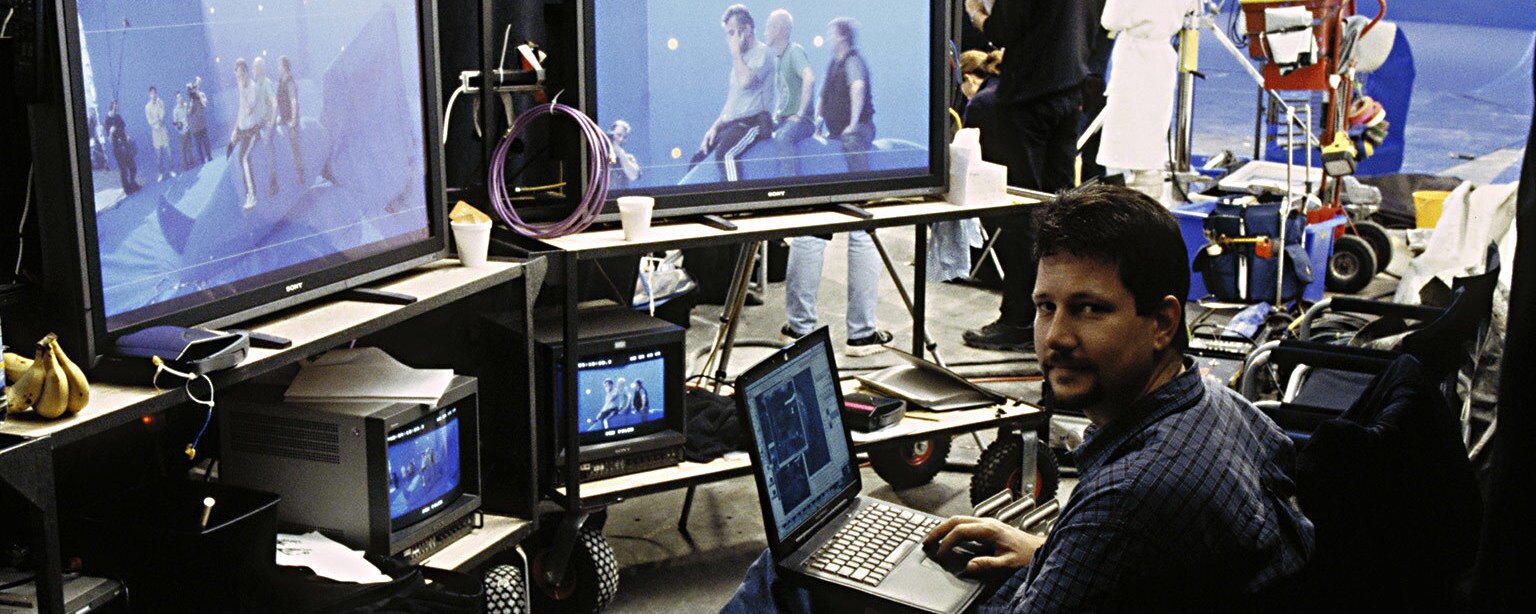
For every decision made in the rehearsal, Tenggren is there, keeping notes. "In the process, I might be helping the actors with their lines, helping them match action, and providing camera information from the previous set up or any technical support that might be needed," she describes.Once a take is actually recorded, Tenggren carefully logs any pertinent information that may be required for subsequent takes and set ups. "What I'm watching for is consistency of performance and that we're actually achieving what the director is looking for. In terms of matching action, if it didn't happen, it's my job to inform George, and he'll decide what's important to him. All those things, tonality, technique, and noticing things like focus and composition... you sort of keep a keen eye for everything."
But aside from looking at the picture scene-to-scene, she also keeps an eye on the overall body of work. "If the director says we're trying to do the main theme of this particular Episode as a love story, for example, then there may be a certain tonality that he wants for the entire film. In certain scenes, it may not be present. In others, it may, But it's easy within specific scenes to lose a continuity of timing within the film, or to have too much of one tone. That's something that in my job, I might call out. Also, At a particular junction, if we're two-thirds of the way through the story, I might be asked to remember that we need to make sure that a certain point is clearly communicated."
The sheer number of set-ups keeps Tenggren's job a challenge and her notes extensive. George Lucas' directorial style comes from his background in editing and documentary filmmaking, which results in a large number of set-ups that he pairs down in editorial. With each set-up, Tenggren's eye for details is called upon."Asking what the average set-up on a film versus what an average set up on Star Wars is kind of an unequal, unfair question," she says. "An average drama, before this sort of MTV-age, was around between 600 and 700 set-ups for a movie. On Day 59 of shooting Episode II, the main unit alone had done over 2000 set-ups. By the time Episode II is cut, there will be something like 2,200 cuts in the movie."