Evan Pontoriero, Animatics Artist

Email Archives
June 30, 1998
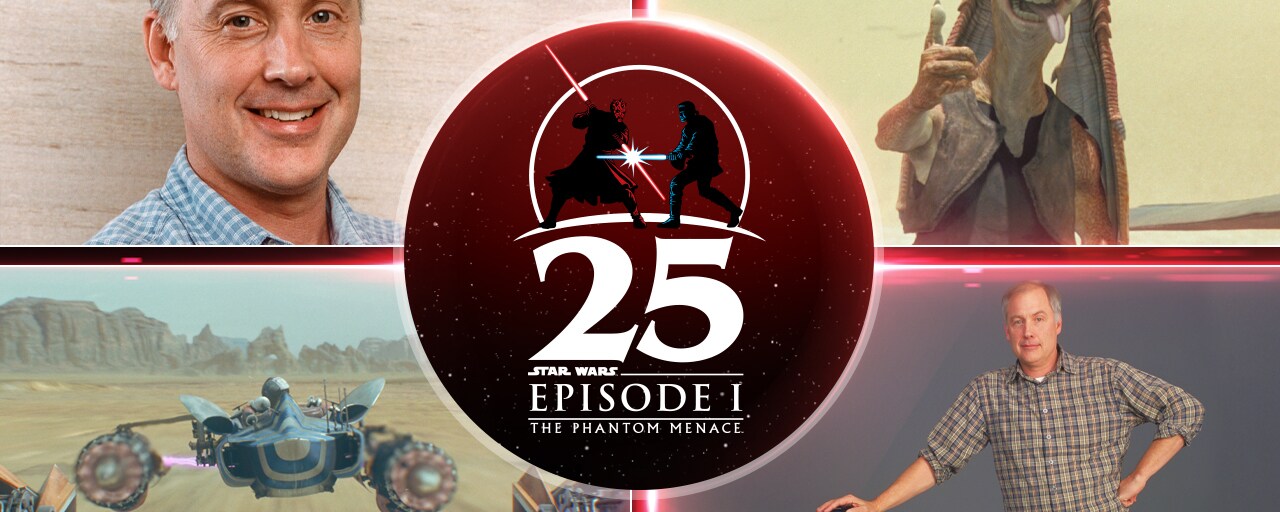
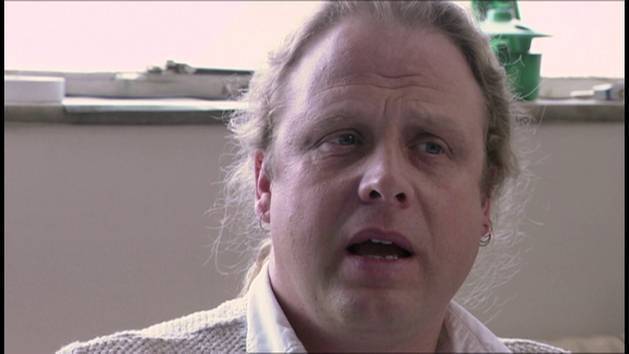
Evan Pontoriero started in visual effects work when he was very young. "That is," he laughs, "I scratched laser blasts onto my friend's Super-8 movies. I have always liked magic, special effects, and space films, and science fiction visual effects work combines all that." Evan is presently hard at work on Star Wars: Episode I, pre-creating effects shots as part of the small animatics team led by David Dozoretz. Today Evan works with fantastic hardware and software, building shots that are sent to ILM as blueprints for the finished effects work. But years ago, he was exploring the world of computers for the first time on Radio Shack TRS-80's. "It was with those TRS-80's that I first realized the creative possibilities that computers held. I did simple ASCII art, that kind of thing. But it hooked me."

Evan went to college for business, but decided that he was better suited for a career in fine art. He ended up taking degrees in both fine art and commercial design. It was while he was working on his degree that he first encountered the Macintosh computer. "The Mac immediately opened so many possibilities in art and graphic design," Evan says. "I saw so many obvious advantages in using the Mac over older methods. But they didn't like me using the computer in design school." Evan pursued his interest in computers anyway, building expertise as a computer artist in spite of the resistance he found at the time. (No one is begrudging him use of the computer now.)

"Then the movie TRON blew my mind," Evan recalls. "The world that created TRON seemed so far away, but that's where I wanted to be. I had read Famous Monsters and other sci-fi magazines throughout my youth, but when I started reading magazines like Computer Graphics World and Cinefex I really got serious about my interest for the first time."

Over time Evan found that he had a natural ability with three-dimensional composition. His training in sculpture had given him a good grasp of three-dimensionality, and this background found a new application as he worked with off-the-shelf 3D programs. He decided to take a plunge and moved to the San Francisco area to start looking for a job in the computer graphics field. A variety of projects including visualizations and animation for multimedia projects built his increasing familiarity with the needed software and kept him in touch with the user community. One job led to another, until Evan had worked with industry players such as famous sci-fi designer Ron Cobb and ILM Art Director Alex Laurent. With a partner Evan founded the successful computer game and 3D design company Meshworks, which he ran until Episode I caught his attention. Then Evan met ILM's Alex Lindsay in a software users group meeting. Alex soon suggested that Evan submit a portfolio for the new Star Wars: Episode I project, and in May of 1997 Evan put together a sample of his best work, including a CG Cloud City shot that looked as if it could have been in The Empire Strikes Back. It was on the basis of this work that he was selected for the animatics team at Skywalker Ranch.
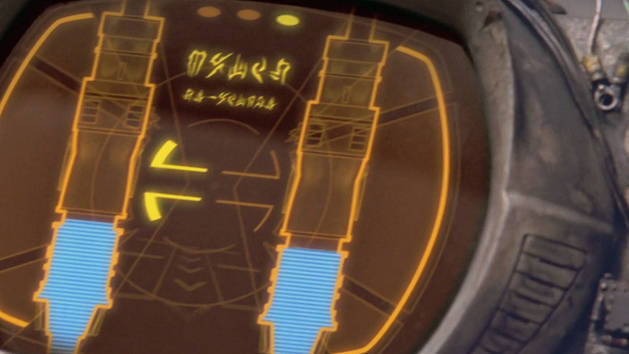
In the course of his work on Episode I, Evan revels in using the broad range of computer art skills he has developed along the way. "I love being able to do it all," he says. "That's why I work here. I'm not pigeonholed. I may not be the world's best at any one thing, but this job puts many difficult responsibilities together and allows us to focus on composition and storytelling, not technical details. It lets us feel more like filmmakers. For animatics to work right, you can't get bogged down in details like textures and final quality models. The details are important for the final shot to look real, but all that can come later. In animatics you're working at a different level, to capture movement and feel and atmosphere."
If he does have a specialty, it is in working motion-capture into his animations-a process which takes data from a live person's movements and translates them to a CG character for added realism. "I'm kind of slow and meticulous about modeling, so the other guys tend to do more of that since they're faster. I do more animation, in programs like Softimage."

The whole purpose of the animatics team's work is to better realize George Lucas' vision for Episode I, but this affords the animatics artists great freedom. "Animatics are a good tool for George because he likes to be shown material to react to." This allows the animatics artists the flexibility to explore, since their initial directives are so open-ended. "Sometimes it's like, 'Let's do a cool shot and see if George likes it.'"

As he sits at his workstation looking out over the Marin hills, Evan is more than pleased with how things have worked out. "Certainly this is a dream job," he says. "This is my chance to do storytelling, to create shots for this story." It is a unique position to be in. "Where else can you do this kind of work, without actually being the director?" At the same time he is still on the path that has brought him this far. "I have to be learning to enjoy my position, and there is plenty of learning going on since we are all experimenting with a new way of filmmaking. I'd like to do my own animated short film, eventually. But I still have a lot to learn here."

Being part of the animatics group has had unexpected rewards as well. "Early on in my career, it was all about me. There was a great pressure to try to do things on my own," he reflects. "Here I have realized that I could get fulfillment through being part of a creative team. I've realized that what I really wanted was to do this kind of work. Being on my own has turned out to be not as important as learning to be a great storyteller."


Keywords: Animatics, Behind-the-Scenes

Filed under: The Movies, Episode I
Email Archives
 (
0 ratings
)

Comments: 0 total     See All

Q&A: You've got staff who came right from high school. How did they do that?
You've got a couple of guys on staff who came to you right from high school. How did they do that? Is there hope for others to follow?
Q&A: Could you give us a simple explanation of animatics?
We've heard a lot about "animatics," but it's still a bit confusing. Could you give us a simple explanation?
Cinefex Features Episode I
The latest issue of Cinefex Magazine, the leader in visual effects journalism, features a detailed synopsis of the making of Episode I.
Kevin Baillie and Ryan Tudhope Chat Transcript
Join Lucasfilm animatics artists Kevin Baillie and Ryan Tudhope for a chat about the making of Episode I.
Animatics Chats
Read the transcript from Wednesday's chat about the animated storyboards of Episode I with Pre-Visualization/Effects Supervisor David Dozoretz and Animatics Artist Jeff Wozniak.
Final Animatics News!
David Dozoretz is now completing what we believe will be the very last animatic pre-visualization for Episode I.
Ryan Tudhope: Animatics Artist
One by one, ILM is completing the Episode I final effects shots, and some of those shots had their genesis in the work of a teenager.
Animatics: The Moving Storyboards of Episode I
To demonstrate how the animatics team creates a typical animatic shot, we've put together a demo shot made just for the web.
David Dozoretz, Animatics Supervisor
On-site at Skywalker Ranch is a small group of artists using computer-generated movies called animatics to pre-visualize the imaginative sequences of Star Wars: Episode I.
Episode I Status Update
After the 65-day shoot of principal photography at Leavesden Studios last year, Episode I production has for the most part shifted into the next phases of film-making: editing and the creation of visual effects.
Newsletter sign up!
Enter your email here and receive exclusive Star Wars updates