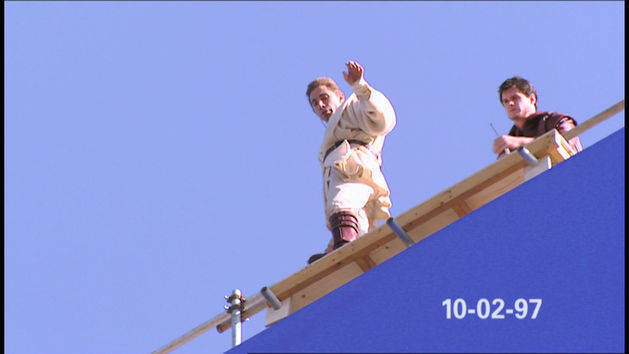
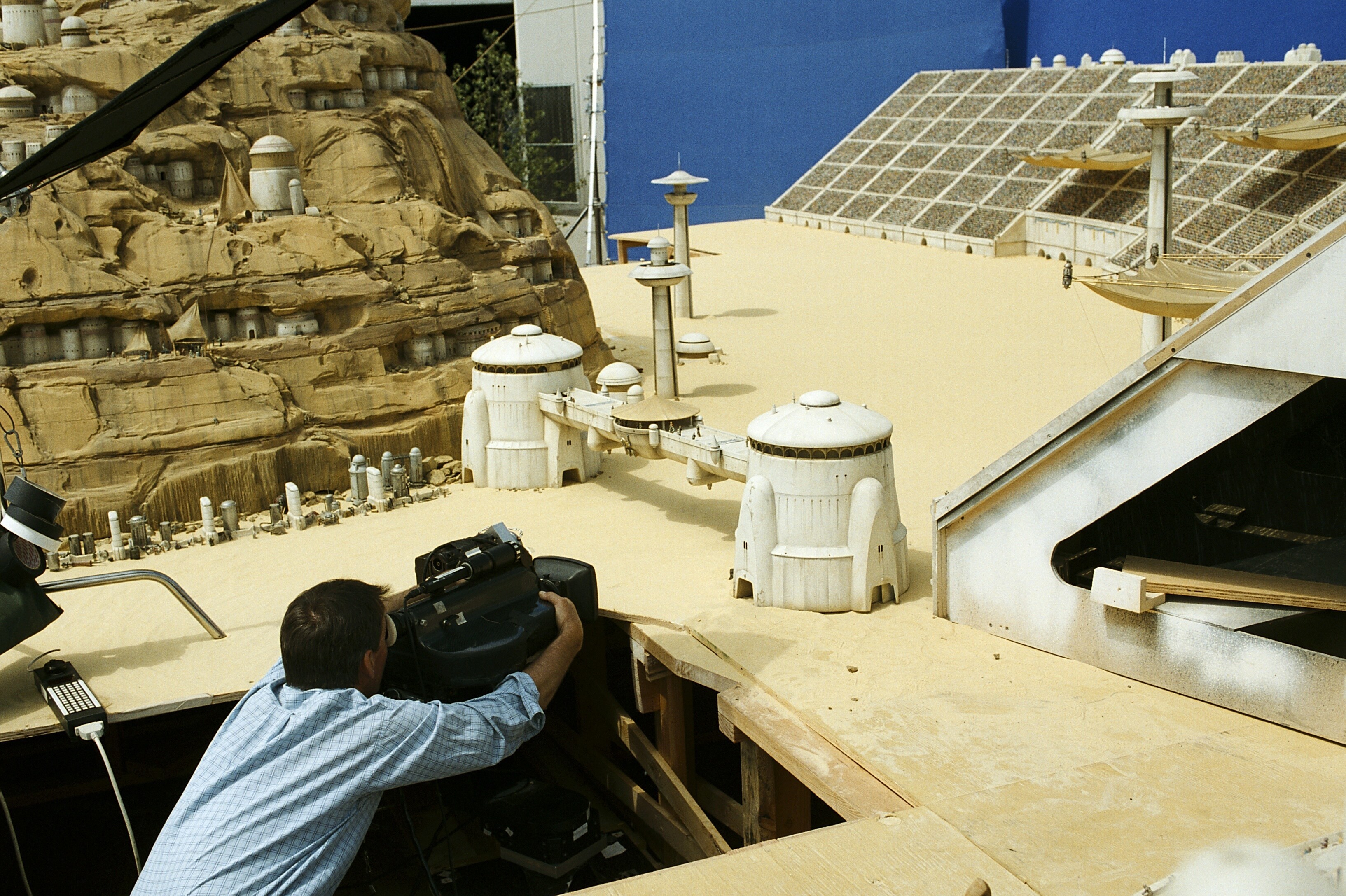
After the 65-day shoot of principal photography at Leavesden Studios last year, Episode I production has for the most part shifted into the next phases of film-making: editing and the creation of visual effects.
As with any film, every effort has been devoted to editing together a rough cut of the film as quickly as possible. For Episode I, part of the importance of the rough cut is to identify the visual effects shots to be ordered from ILM. The rough cut will show where visual effects are needed, the storytelling they must convey, and their exact content and duration.
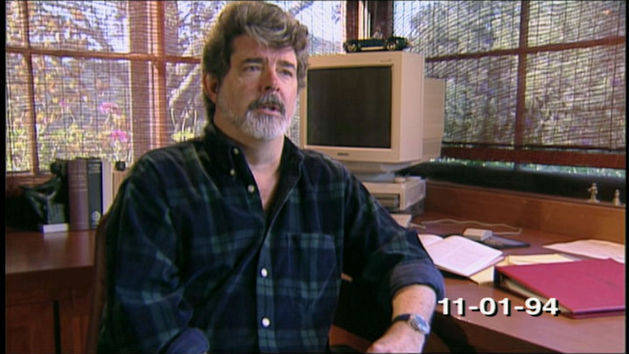
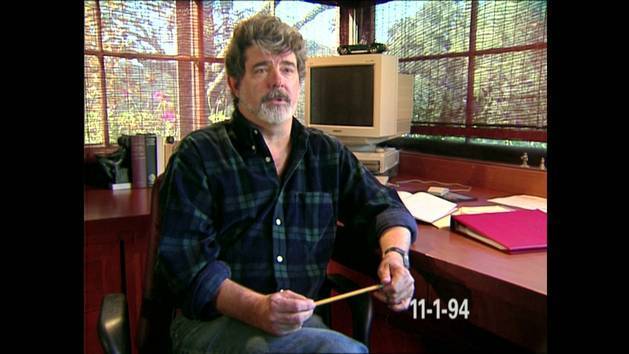
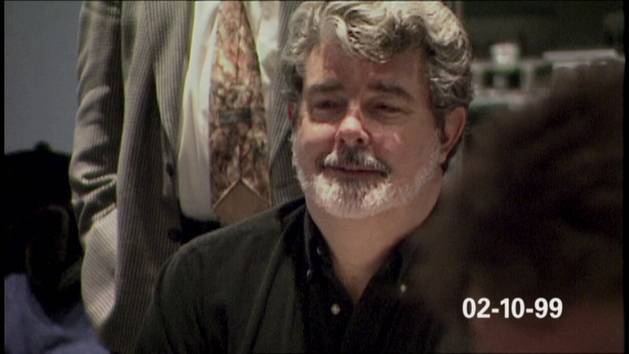
Crafting the vital rough cut from the film shot at Leavesden is a hard-working team at Skywalker Ranch. Episode I Editor Martin Smith is at home in his element in the editing room with George Lucas and the editing group. Rick McCallum calls Smith an "absolutely fantastic" editor, who has tackled the job of Episode I with a sure touch and superior skill. Smith is aided in his work by 1st Assistant Editor Mary Pat Plotner. George Lucas spends much of his time in close consultation with Smith and the editing team.
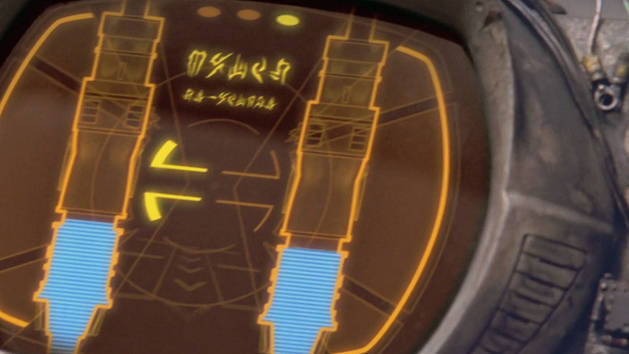
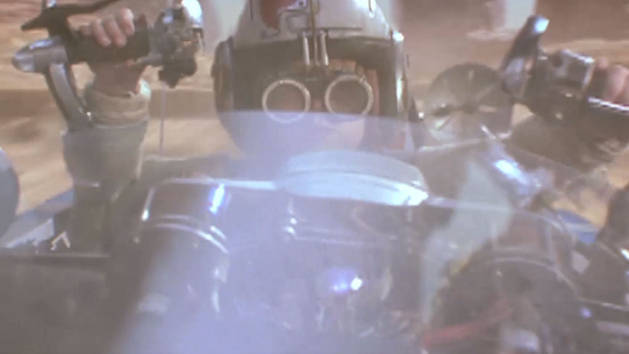
The editing process involved for Episode I involves great flexibility, in which shots can even be re-composed after the fact, to fine-tune the realization of the director's vision. Multiple takes can be separated and re-combined, characters can be added or deleted, and textures or colors may be changed. An actor's stray blink can be removed if the take is otherwise ideal. If the evolving storyline changes to require the appearance of a character not filmed in principal photography, then that character may be picked up in later rounds of shooting and then composited in. All these possibilities and more are involved as the editor creates sequences for the rough cut.
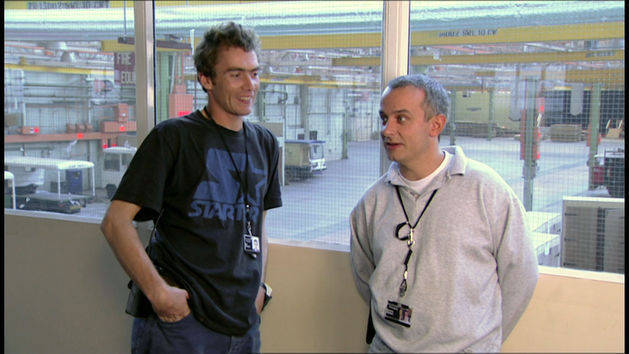
Meanwhile at ILM, a team of top supervisors has been assembled, dividing their efforts between the major sequences of the film. John Knoll is responsible for supervising the effects of the principal action sequence in the film, while chiefs Dennis Muren and Scott Squires have taken on the effects of two other distinct Episode I environments.

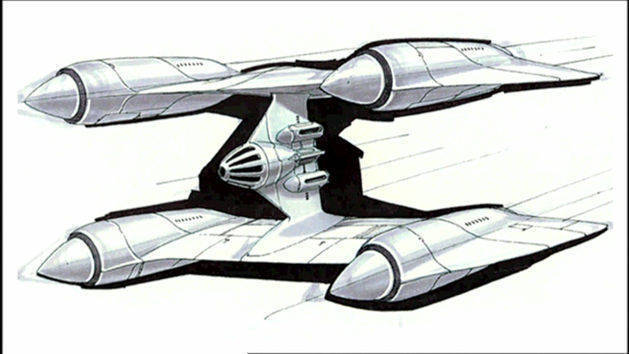
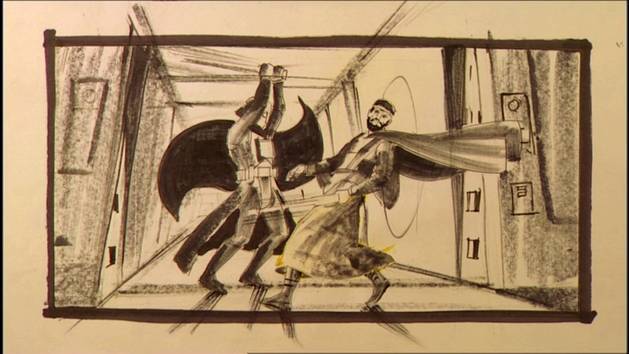
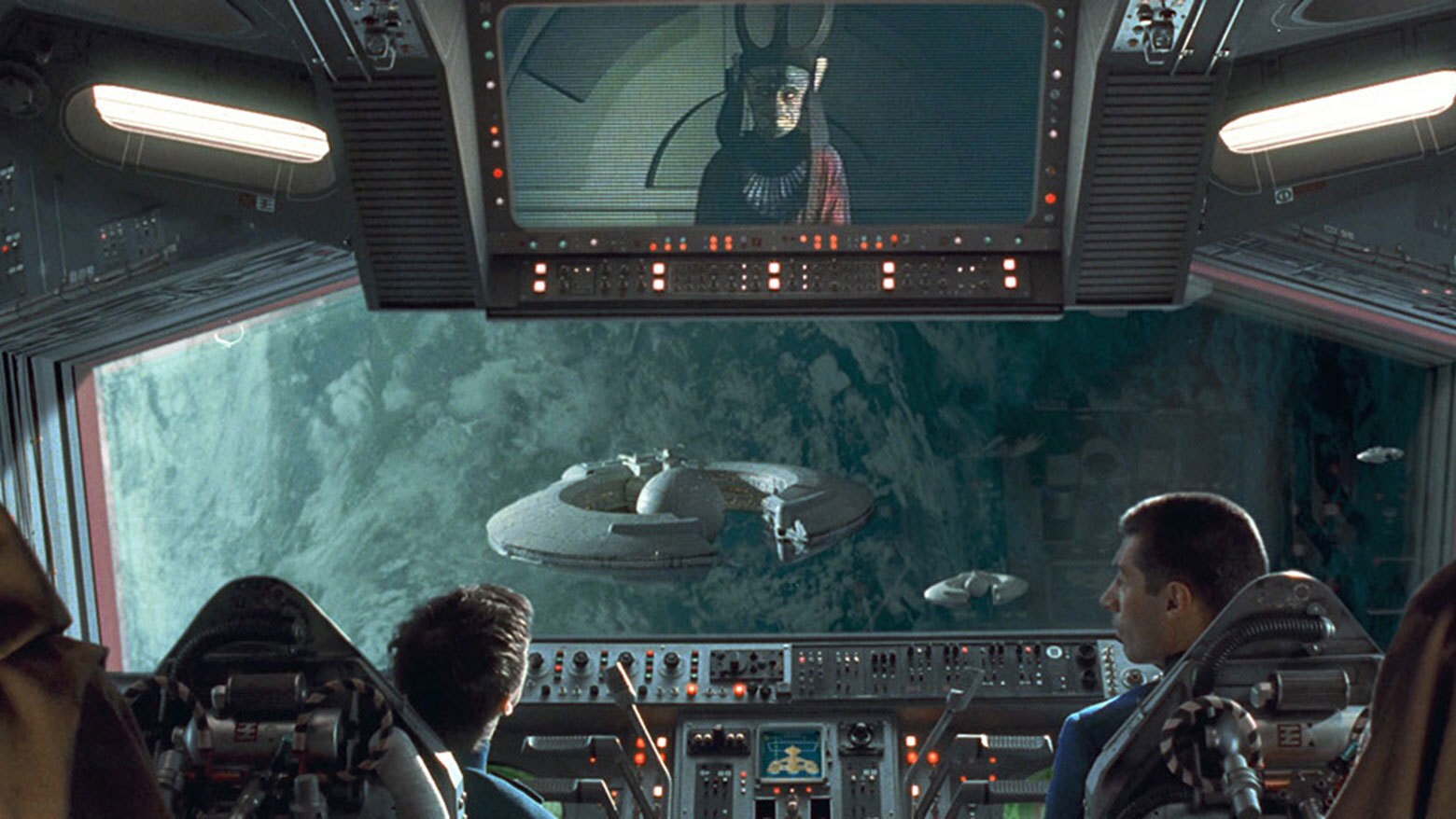
At Skywalker Ranch Martin Smith works toward "locking off" a sequence, refining the editing as far as possible without the missing effects elements. To assist Smith and his group, a small commando team in the Art Department pre-creates missing scenes as "animatics," completing or even completely generating scenes, including landscapes and spacecraft and many other elements that may show up only as blanks or blue screens in the shot footage. These animatics are composed and refined to the director's satisfaction and then cut into sequences by the editor. Each week, locked off sequences including animatic blueprints are handed to the appropriate supervisors at ILM for the next step.
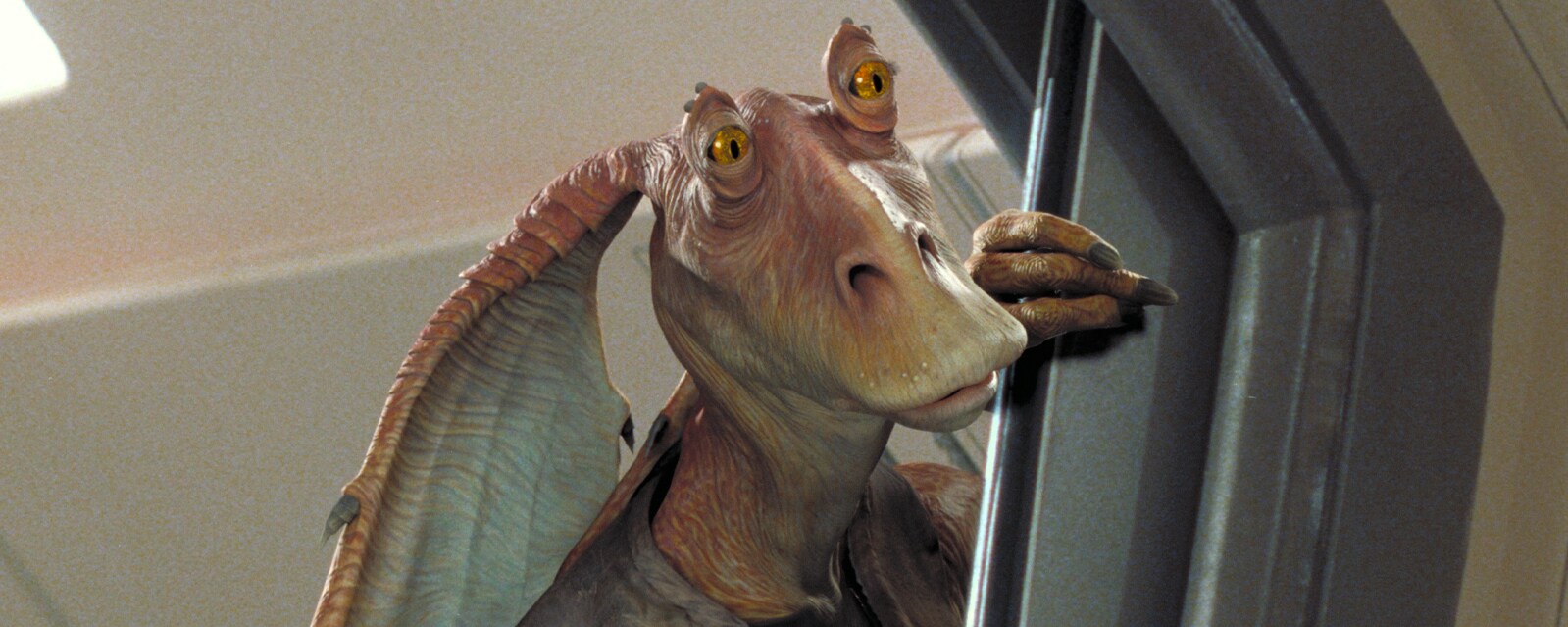
For scenes which include CG characters, ILM typically creates what they are calling "pose-a-matics," which pose simple versions of CG characters in a scene, roughly blocking their action alongside the actors filmed in principal photography. In a pose-a-matic, the CG element is just a gray, static mock-up, merely standing in to gain approval of the overall choreography. It pops from pose to pose through the shot in a rough approximation of its finalized movements. When this blocking is approved, it may returned to Skywalker Ranch for a second round of editing, and a second lockoff, depending on whether further editorial refinements are called for. Sometimes an animator will contribute interesting character behavior that will alter the flow of a scene, or, having seen an effects character in motion, George Lucas may get new ideas that affect the revision of the scene.

When the sequence comes back to ILM after its final lockoff, the visual effect elements are added in earnest, in full resolution and color, following the animatics and pose-a-matics in the rough cut footage. The effects in these shots are "finalled" to completion under the supervision of Concept Design Director Doug Chiang, the appropriate sequence effects supervisor at ILM, and Animation Supervisor Rob Coleman, who prepare a refined shot for final approval by George Lucas.
The present work on Episode I will lead to more photography and more art design as imaginative sequences take shape within the overall story. There is a great deal of creation ahead, but already the vision of Episode I is taking substantial form.