Let There Be Light!

Email Archives
September 10, 1999

Creating a Universe

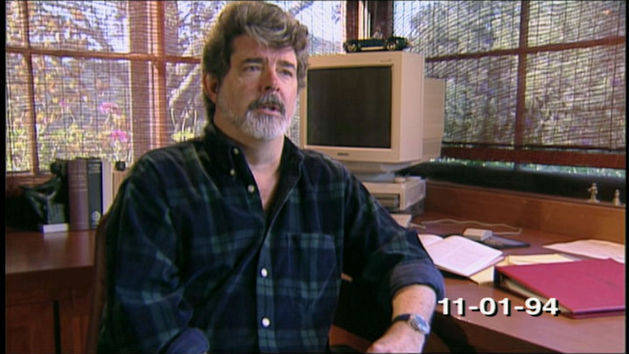
As one of the three Industrial Light & Magic visual effects supervisors who worked on Episode I, Scott Squires had to deal with the creation of virtual realities on a daily basis. But the challenges of visual effects have changed a lot since the computer revolution reached cruising speed at the beginning of the 1990's.
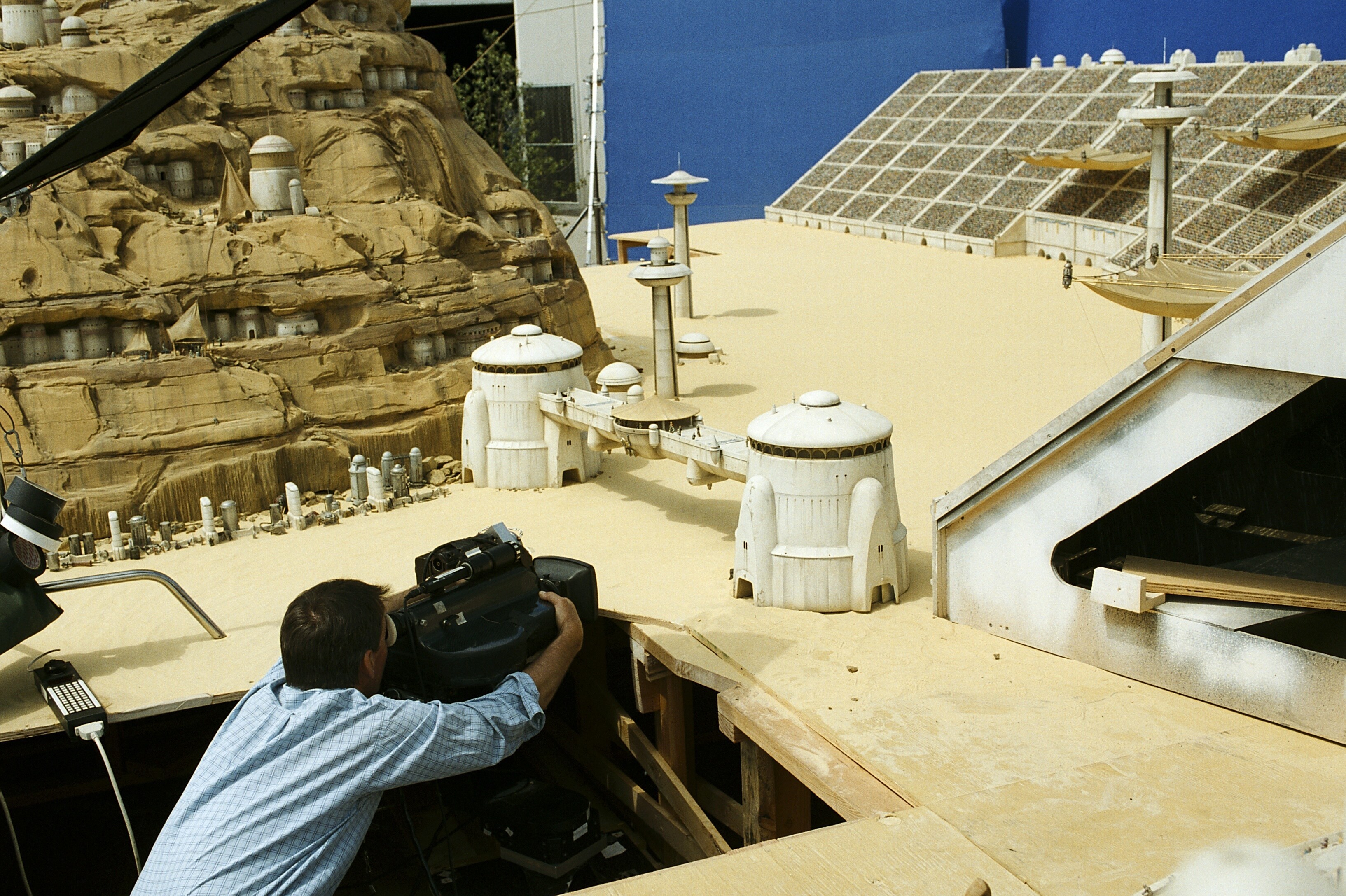
Now able to manipulate photons like atoms to create an entire universe and its inhabitants, the visual effects wizards at Industrial Light & Magic use computers to accomplish an always-increasing number of tasks that were traditionally handled not only by model builders, but also set builders and practical effects specialists.

"Our first step is to scan the film into the computer so that the whole shot is digitized," says Squires. "Then everything is done digitally from that point." For visual effects veterans, this is a great leap from the way effects work was accomplished before computers took over. For instance, the traditional procedure used to combine several different elements in the same frame is called "optical compositing," and involves the projection of a series of already-shot visual elements that are re-photographed, in sequence, on unexposed areas of a previously partially-exposed strip of film. Optical technicians first photograph a background using mattes, which are opaque silhouettes used to block out certain areas of the film. Then the technicians "fill in the gaps" by photographing the rest of the elements, placing each of them in the proper blank space left by the mattes during the first step of photography. But if the asteroid added to the star field background during step two needs to be partially covered by a spacecraft, then the asteroid will be photographed with a matte in the shape of the spacecraft on top of it, in order to leave the blank space that will be occupied by the ship in step three - and so on. When this delicate process is completed, when all the layers have been added, the result is one frame of film. Twenty-three more of these will be required to create the illusion of one second of movement on the screen.

Visual effects used to be created in such ways, because optical compositing was simply the most effective process at the time. All the space battles in the classic Star Wars Trilogy, among other scenes, were painstakingly done using optical compositing techniques. In some cases, particularly in Return of the Jedi, the procedure involved putting together up to forty layers of visual elements combined on a background, for just one frame of film. Now that the digital revolution is in full bloom, the technology allows visual effects creators to combine different elements within the memory of a computer, without ever touching a piece of film. And though the digital age gives filmmakers access to a broader range of effects than what had been possible before, the work remains just as complex as it has always been. Better doesn't necessarily mean easier, especially in the world of visual effects.

Whether the computer is used to combine two live-action elements photographed separately or a live-action shot with a computer-generated object, the process of digital compositing remains generally the same as it was with optical compositing, with each new layer being added onto the previous ones. Except, of course, that everything is accomplished within the computer. More importantly, the output also remains the same: one frame at a time. "After the digital work it goes back out of the computer: we put out little frames every day - this is called a "wedge" - just so we can check the color and the look on film," says Squires. Still, today's visual effects wizards have more power, and can do more in less time than was required in the past. Gone are the days of white-gloved optical artists manipulating strips of film in a dust-free environment. But enhanced power comes with enhanced challenges.

1
2 Next


Keywords: Behind-the-Scenes, ILM

Filed under: The Movies, Episode I
Email Archives
 (
0 ratings
)

Comments: 0 total     See All

Celebrate 10 Years of The Phantom Menace
On May 19, 1999 the Star Wars saga began anew....
Celebration Soundbites: Nick Dudman Part II: Q&A
Our Celebration I panel audio continues with an audience Q&A with Star Wars creature effects supervisor Nick Dudman
A Look Back at Star Wars Celebration
Splish Splash, the Star Wars Celebration was a Smash! Fans from all corners of the globe descended on Denver, Colorado April 30-May 2, 1999, for the grand three-day event.
Celebration Soundbites: Nick Dudman
Listen in on the goings-on in Hall A of 1999's Celebration I in this first of a four-part audio series commemorating the fan event's tenth anniversary.
Snapshot: Shelved Creature Heads
Shelved creature heads in the Creature Effects Department at Leavesden Studios.
Q&A: What kind of new technologies were developed to realize Episode I?
Many visual effects techniques for The Phantom Menace had never been attempted before. How much new technology and software needed to be developed to carry out what was required. Who does that kind of work and how long does it take?
Snapshot: John Fensom
Malcolm Evans (Left, Animatronic Model Designer) and Vicky Winning (Art Finisher) outfit John Fensom (Designer Creatures Assistant) in a protocol droid costume in preparation for a stills shoot in the Stills Studio at Leavesden Studios.
Snapshot: Idle Landspeeder
An idle landspeeder rests on the Mos Espa main street set, on location near Tozeur, Tunisia.
Snapshot: Horox Ryyder
A close up of the fully painted head piece from the Horox Ryyder costume, in the Creature Effects Department at Leavesden Studios.
Snapshot: A Sea of Bluescreen
Qui-Gon Jinn (Liam Neeson) sits amid a sea of bluescreen. Industrial Light & Magic magicians will later digitally add a lumbering eopie and background to complete the scene.
Newsletter sign up!
Enter your email here and receive exclusive Star Wars updates