Looks Are Everything - Part II

Email Archives
July 1, 1999
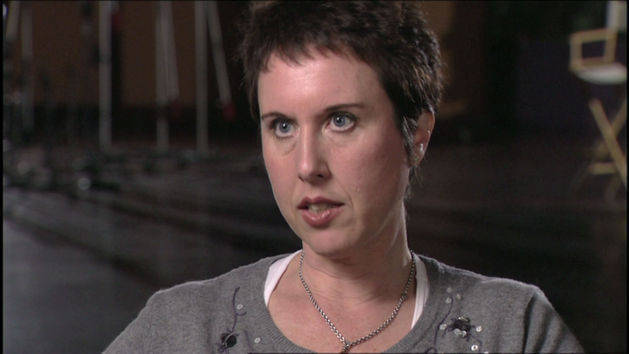
Working closely with the Costume and Make-up Departments, Chief Hairdresser Sue Love was responsible for one more of the crucial elements that work their magic to bring to life the characters of Episode I.
"I've always been a hairdresser, always wanted to be a hairdresser," begins Love, whose career in the movies began around the time Star Wars opened. "I had done everything in the salon, had gone as far as I could. And in the 70's, when blow drying came in, it all became very boring. So I made some contacts in the film business, and when I was given a chance, I took it." Love has been at it ever since, weaving her hairdressing spell in such productions as Braveheart and The Fifth Element. "My very first project was a movie called Arabian Adventure," she recalls. "I then worked on a British television series called The Professional, and I went on from there." With her daughter Sarah in tow, Love was unwittingly planting the hairdressing bug in her family lineage. "I used to follow mom around," says Sarah, "and I eventually ended up training as a hairdresser myself. I then worked in the theater industry for a couple of years before moving to films." Over the years, mother and daughter collaborated on a few projects, including The Fifth Element. They were reunited once again when Producer Rick McCallum hired them to work on Episode I.

Sculpting hairstyles on the set requires a broader range of abilities than what might be expected in the salon, and proper training is key. "You just need to have an all-around knowledge of hair and hairdressing," explains Sue Love. "I was fortunate in my training during the 60's, because you got that, you did everything. Nowadays they just don't do it anymore, they pretty much just do the cutting and the drying. But for all the period work, you have to know how to do the different hairstyles, you have to master the different techniques, the wigs and everything." The approach to movie hairstyling can also be very different than standard hairdressing, both in terms of the techniques involved and the expected results. "First of all, there's not as much worry about permanency," says Sue Love. "You can sometimes use temporary techniques, because you know that hair only needs a lifespan of a few hours." This allows hairdressers to create complex hairstyles that, if required to last for any significant period of time, would be impossible to achieve. "Then there is the fact that you know your work is going to end up onscreen," Love continues, "and that your tiny mistake will be magnified and appear on a 40-foot wide head. So you've got to be extra careful."

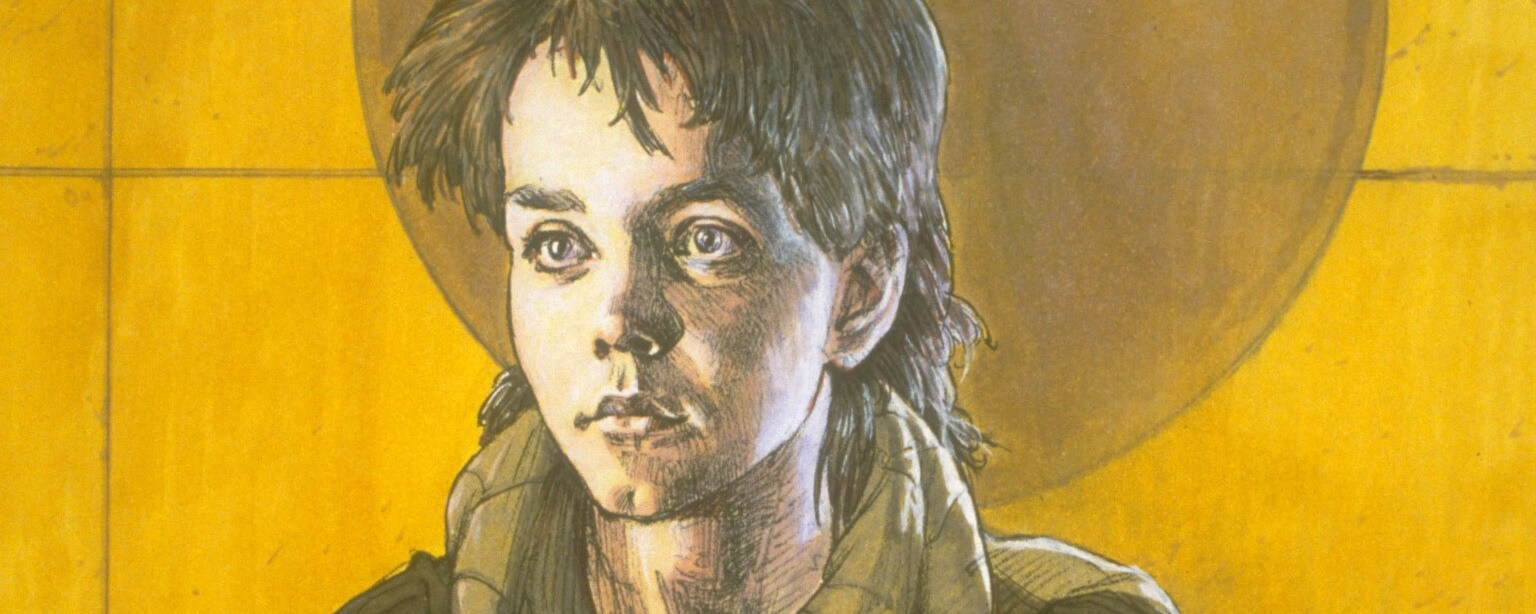
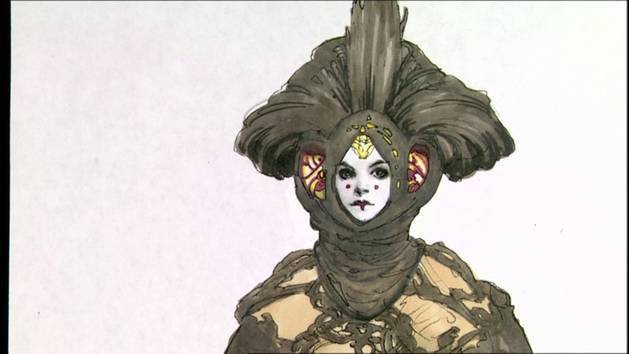
On Episode I, Sue and Sarah Love had one month to prepare before principal photography began. Armed with concept art and tapes of the original Trilogy, they started planning. "We spoke to George, and he gave us directions," says Sue Love. "He's very clear and definite in what he wants, but of course he leaves the methods of achieving those results to us. And he always listens when we tell him that something is impossible." But the Loves were determined not to let this happen often, no matter how complex the designs of Concept Artist Iain McCaig proved to be. But concept art only covered hairdos for the main characters, and for all the others who wore hair, it was up to Sue and her daughter Sarah to give them convincing hairstyles. "We didn't do all the rest," points out Sue Love. "There are quite a lot of creatures in this movie, and we didn't work on those for obvious reasons. And we didn't work on the digital characters either." That still leaves a large population that needs hair care. "In order to prepare for the job," continues Love, "we watched all three original movies. We spent a whole day just watching the movies, rewinding scenes and watching them again, over and over again." The Loves played the movies in chronological order, but also watched them in reverse, so that they could somehow "devolve" the hairstyles from Return of the Jedi to A New Hope, and all the way down to Episode I. "We had to grasp not only the differences between the people from Tatooine and the people from Naboo, but also the variations in the way they wear their hair from one timeframe to another," says Sarah Love. "From one movie to another, the characters are all related in some way, and we wanted to preserve that continuity."

For practical reasons, a movie is usually shot out of sequence, which means that hair management can become a complex puzzle at times. Unlike make-up artists, hairdressers can't afford the luxury of erasing a mistake and starting over. Once the scissors have thinned or shortened an actor's hair, there is no turning back. Wigs can help up to a certain point, but they remain far from being an ideal remedy. The character of Obi-Wan Kenobi, among others, required some wizardry on the part of the Loves. "We had to cut Ewan's hair quite short and give him a braid on one side," explains Sue Love. "But then George thought a pony tail at the back of the head would look good, which is of course we couldn't do since the hair was gone! So we shuffled around, found some hair that matched Ewan's, and attached it. And George was right: it worked beautifully."

Stunt doubles also carry with them their load of practical problems for hairdressers, because the transition from one performer to the other, on screen, must be accomplished seamlessly. "At first we tried dyeing the hair of Ewan's stunt double, but it didn't quite work," Sue Love says. "So we had to use a wig. It worked well, but you still have to be extremely careful and really pay attention, because the better the match between actor and stunt double, the closer the camera can go on the double." For obvious reasons, stunt doubles are often shot from a back angle; this makes hair is one of the main elements, along with the costume, that allow audiences to readily recognize the character. "So it should be really exact," comments Sue Love.

1
2 Next


Keywords: Behind-the-Scenes

Filed under: The Movies, Episode I

Databank: Amidala, Padmé
Email Archives
 (
0 ratings
)

Comments: 0 total     See All

Celebrate 10 Years of The Phantom Menace
On May 19, 1999 the Star Wars saga began anew....
Celebration Soundbites: Nick Dudman Part II: Q&A
Our Celebration I panel audio continues with an audience Q&A with Star Wars creature effects supervisor Nick Dudman
A Look Back at Star Wars Celebration
Splish Splash, the Star Wars Celebration was a Smash! Fans from all corners of the globe descended on Denver, Colorado April 30-May 2, 1999, for the grand three-day event.
Celebration Soundbites: Nick Dudman
Listen in on the goings-on in Hall A of 1999's Celebration I in this first of a four-part audio series commemorating the fan event's tenth anniversary.
Snapshot: Shelved Creature Heads
Shelved creature heads in the Creature Effects Department at Leavesden Studios.
Q&A: What kind of new technologies were developed to realize Episode I?
Many visual effects techniques for The Phantom Menace had never been attempted before. How much new technology and software needed to be developed to carry out what was required. Who does that kind of work and how long does it take?
Snapshot: John Fensom
Malcolm Evans (Left, Animatronic Model Designer) and Vicky Winning (Art Finisher) outfit John Fensom (Designer Creatures Assistant) in a protocol droid costume in preparation for a stills shoot in the Stills Studio at Leavesden Studios.
Snapshot: Idle Landspeeder
An idle landspeeder rests on the Mos Espa main street set, on location near Tozeur, Tunisia.
Snapshot: Horox Ryyder
A close up of the fully painted head piece from the Horox Ryyder costume, in the Creature Effects Department at Leavesden Studios.
Snapshot: A Sea of Bluescreen
Qui-Gon Jinn (Liam Neeson) sits amid a sea of bluescreen. Industrial Light & Magic magicians will later digitally add a lumbering eopie and background to complete the scene.
Newsletter sign up!
Enter your email here and receive exclusive Star Wars updates